This Church is a safe place; Human Rights are respected here
The Seven Categories
Fundamental freedoms: You have the freedom of conscience and religion; thought, belief, opinion, and expression (including the press); peaceful assembly; and association.
Canada.ca
Democratic rights: Citizens can vote in elections and run for political office. Parliaments and legislative assemblies must hold elections at least every five years.
Department of Justice Canada
Mobility rights: Canadian citizens and permanent residents can enter, stay in, or leave Canada. They can move to and work in any province or territory.
Department of Justice Canada
Legal rights: You have the right to life, liberty, and personal security. You are protected against unfair treatment, arbitrary arrest, unreasonable search and seizure, and cruel punishment.
Canada.ca +1
Equality rights: Every person is equal before and under the law. You have the right to equal protection and benefit of the law without discrimination.
Canada.ca +1
Official language rights: English and French are the official languages of Canada. They have equal status in Parliament, federal courts, and government institutions.
Department of Justice Canada
Minority language educational rights: Citizens belonging to a French or English linguistic minority in a province can have their children receive primary and secondary school instruction in their native language, where numbers warrant.
Canada.ca +1
———————————————————————-
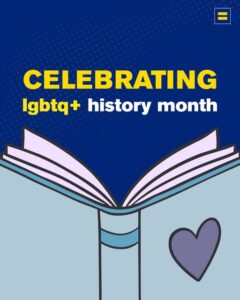
**October is LGBTQ+ History Month!
Founded in 1994 by Rodney Wilson, the first openly gay K-12 teacher in Missouri, LGBTQ+ History Month is a time to celebrate our community’s rich history and recognize our ancestors who fought for our right to be out, loud, and proud.
What LGBTQ+ person, place, or event do you want to learn more about this October?
**At a joint press conference earlier today, President Gina McKay shared that as Manitoba’s largest Union, CUPE Manitoba is proud to join together with the West Broadway Tenants Committee, the Manitoba Association of Newcomer Serving Agencies, the Right to Housing Coalition, and Pride Winnipeg, in support of legislation that directly affects Manitoba workers and communities.
President McKay shared that “housing is a human right as recognized under international law, and as the Right to Housing Coalition highlights, that all people have the right to housing, and all levels of government have a responsibility to ensure this right through strong policy and action.”
—————————————————–
**A Dossier on Human Rights Violations in Pakistan has been released, documenting blatant human rights abuses following the regime change operation in April 2022. Since then, Pakistan has remained in a constant state of suppression, with fundamental rights systematically crushed under a military-backed regime. Democracy has been dismantled, and the rule of law effectively suspended.
———————————————————–
**Congratulations to Dr. Amanda Dale on her election to the Committee on the Elimination of Discrimination Against Women! Her work will help strengthen the international human rights system and advance the rights of women and girls—priorities Canada remains committed to championing.
——————————————————————————
————————————————————————————–
As Canadians, we often hear that we have “rights and freedoms” — but many people are not exactly sure what those rights are or where to find out about them.
That’s why we wanted to tell our Whereabouts Unknown followers about this little-known free program from the Government of Canada.
The Canadian Charter of Rights and Freedomsis one of the most important documents in Canada. It clearly explains the basic rights and freedoms people have in this country and how governments, police, and the courts must treat people under the law — including within the criminal justice system.
It includes rights such as:
• Freedom of speech and religion
• The right to vote
• The right to be treated fairly by police and the courts
• Protection against discrimination
• Legal protections for people charged with crimes
It is written to help Canadians understand the protections and freedoms they have in everyday life.
We have copies displayed in every office here because we believe it is important to be informed and understand the rights we all share as Canadians. We’ve worked on enough wrongful conviction cases to know that most folks don’t have a full understanding of their Charter rights when dealing with the police, and when they’re before the courts.
Many people do not realize they can request a FREE printed copy (suitable for framing) from the Government of Canada including:
• Poster-size copies
• Certificate-size copies
There is no cost at all, including shipping.
A free copy of The Charter is available in English, French, Indigenous and other languages. A complete list is available at the link.
Today is the International Day for the Elimination of Racial Discrimination. It’s a moment to reflect on the importance of building a justice system rooted in Canadian values of equality, fairness, and respect – where racism has no place.
Systemic racism continues to shape how people experience the justice system. Work is underway to address these inequities through initiatives such as:
The Indigenous Justice Strategy — developed in consultation and cooperation with First Nations, Inuit and Métis, including Modern Treaty and Self-Government Partners, to address systemic discrimination and the overrepresentation of Indigenous people in the justice system and to support the revitalization of Indigenous laws and legal orders.
The UN Declaration Act Action Plan — to achieve the objectives of the UN Declaration on the Rights of Indigenous Peoples and advance transformative, lasting change for Indigenous peoples in Canada. and
Canada’s Black Justice Strategy — developed in consultation with Black communities across Canada, including an external Steering Group of experts and leaders, to address anti-Black racism and systemic discrimination that has led to the overrepresentation of Black people in the criminal justice system, including as victims and survivors of crime.
——————————————————————————————–
The Justice Centre announces the launch of a national petition calling upon all Members of Parliament to defeat Bill C-22,legislation that will significantly expand government surveillance powers.
If passed into law, Bill C-22 will empower the federal government to order electronic service providers to:
– develop capacity for extracting and organizing Canadians’ data for government and law enforcement review
– install devices that allow government and law enforcement to access Canadians’ data
The United Church of Canada laments the tragic violence in Tumbler Ridge and holds in prayer the families, loved ones, and entire community who are now living with shock, trauma, and profound loss. It is in moments such as this, we are reminded of our deepest calling as followers of Jesus: to care for one another, to protect the vulnerable, and to seek justice rooted in compassion.
In the wake of this tragedy, The United Church of Canada affirms a simple but essential truth: one person’s actions never define an entire community or identity group. At a time when fear and suspicion can take hold, we call on all people of faith and goodwill to let love, compassion, and our shared humanity lead the way. No community should be judged by the actions of an individual, and no moment of violence should be used to create division or deepen stigma.
We also affirm clearly and without hesitation: trans and nonbinary people and all those who identify as genderqueer and gender-fluid are beloved members of our churches, our families, and our communities. The United Church of Canada has long upheld the sacred worth of all people and continues to work toward communities marked by compassion, justice, and mutual care. That work is especially urgent now.
Every person is a child of God, carrying inherent dignity that cannot be diminished by the actions of another. Violence is never who we are called to be.
National Day of Reading began 11 years ago after a first grade teacher received backlash for wanting to read “I am Jazz” by Jazz Jennings to the class.
In response, allies in the community got together and hosted the reading at a local library. HUNDREDS showed up.
Every year since, readings have taken place nationwide to celebrate trans and non-binary youth through LGBTQ+ stories. Learn how you can celebrate: hrc.im/NDOR
—————————————————————————-
The United Church of Canada has committed to engaging with the United Nations Second International Decade for People of African Descent.
“By committing to a second decade as the church, we build on the work we started in the first decade. We affirm our commitment to a long-term project that is consistent with ongoing efforts in anti-racism and anti-Black racism,” says Rev. Adele Halliday, Anti-Racism and Equity Lead for The United Church of Canada.
The United Church’s hopes for the decade will be outlined by a Working Group on Church Legacies for People of African Descent. This working group will continue to deepen our commitments to reparations, reparatory justice, and the 2025 agreement from the 45th General Council to work on a process and related work for an apology from The United Church of Canada to the African Diaspora for enslavement and legacies of enslavement in Canada.
Expressions of interest to contributing to this working group, as well as related groups, are welcomed.
Introducing the members of the NUC Affirm Task force...
Roxanne, Judith, Terri, Judy, Gloria
What does Affirming mean? Speak out, ask questions!!
November is Transgender month
Alex Pretti should be here with us today.
He was an ICU nurse, son, friend, neighbor, rock climber, dog lover, and so much more.
His parents describe him as “a kindhearted soul who cared deeply for his family and friends and also the American veterans whom he cared for as an ICU nurse at the Minneapolis VA hospital.”
Alex was exercising his constitutional right to film and peacefully protest ICE’s presence in Minneapolis. We will not let the Trump administration’s blatant lies hinder the truth or dim Alex’s legacy.
Canada is pleased to join this year’s media Freedom Coalition Statement on International Women’s Day 2026, with a particular focus on defending the rights of women journalists.
—————————————
Canada remains deeply concerned by Iran’s persistent & systematic repression of human rights defenders, religious minorities, students, and the families of protesters and activists. These human rights violations must end. Canada calls upon Iran to immediately release Peyvand Naimi and Borna Naimi, as well as all those facing forced confessions, and arbitrary arrests and detentions.
———————————
April 17, 2026, marks the 44th anniversary of the Canadian Charter of Rights and Freedoms.
Signed in 1982, the Charter affirmed equality rights and laid a constitutional foundation for advancing the rights of persons with disabilities across Canada. Alongside the Canadian Human Rights Act, it was one of the first federal laws protecting people with disabilities from discrimination.
In her first report as Chief Accessibility Officer (CAO), Stephanie Cadieux reflected on this important history and emphasized that the Charter was a turning point for disability rights in Canada. It set the stage for decades of progress in accessibility and inclusion.
The Charter helped make modern accessibility legislation possible, providing stronger legal protection for disability rights in areas such as communications, employment, and transportation. At the international level, Canada committed to the United Nations Convention on the Rights of Persons with Disabilities (UNCRPD) in 2010. These commitments paved the way for Canada’s first federal legislation on disability inclusion and accessibility: the Accessible Canada Act, which came into effect in 2019.
As the CAO reminds us in her report, “Accessibility is not ‘only for the few’; it is for everyone.” The work continues as we build a country where everyone can participate fully and equally.
Alt Text: Purple web card featuring the Canadian Charter of Rights and Freedoms. Text reads “Anniversary of the Canadian Charter of Rights and Freedoms, April 17, 2026.” Our office’s applied signature and the Canada wordmark appear at the bottom.




 Canada.ca
 Department of Justice Canada
Canada.ca +1
Department of Justice Canada

 The Indigenous Justice Strategy — developed in consultation and cooperation with First Nations, Inuit and Métis, including Modern Treaty and Self-Government Partners, to address systemic discrimination and the overrepresentation of Indigenous people in the justice system and to support the revitalization of Indigenous laws and legal orders.
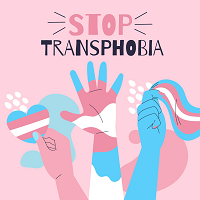 November is Transgender month